
Why Enkidu
Class-leading power. Studio-level control. No app required.
Enkidu is built for people who want a real hypnagogic lamp—bright enough for professional work, and flexible enough to grow with your creativity.
Unmatched brightness (up to 5000 lumens)
The Enkidu Apollo II delivers up to 5000 lumens of high-output, clean light—built for strong closed-eye visuals, stable sessions, and serious room coverage.
Apollo II is powered by 8 ultra high-power 10W LEDs, giving you the intensity and headroom you need for professional use—without the light feeling “thin” or underpowered.
What that power gives you in practice
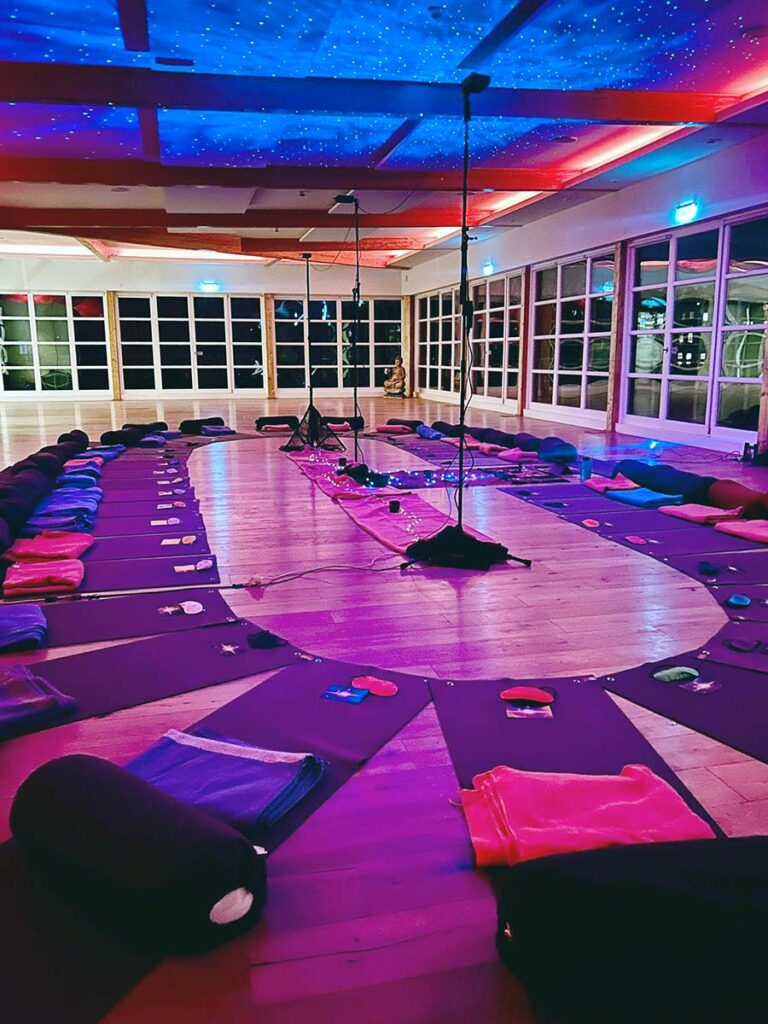
Group-ready coverage: more consistent results when the lamp is placed higher and farther back
Better comfort control: strong visuals without running max intensity all the time
More dynamic sessions: smooth ramps, fades, and crescendos that don’t feel flat
More light, more coverage—scale up in perfect sync
If you want to cover an even larger room, Enkidu can scale beyond a single lamp.
Because Enkidu is audio-driven, you can run multiple lamps in total sync by feeding the same session audio signal to each unit. The result is a clean, reliable way to expand coverage for extra-large group sessions, studios, or multi-lamp installations—without complicated software ecosystems.
And that’s where the value becomes obvious: you’re paying for real luminous performance and open control, so you get more usable light and more coverage per budget—not extra cost tied to a locked platform.
The biggest difference: Enkidu is audio-driven (open format)
Most hypnagogic lamps are built around their own session system—a dedicated editor, internal playback, or proprietary workflow.
Enkidu takes a different approach:
Your light session is an audio file.
Enkidu sessions are encoded into audio—so the lamp can be driven by a standard music player (phone, tablet, laptop, DAC, mixer).
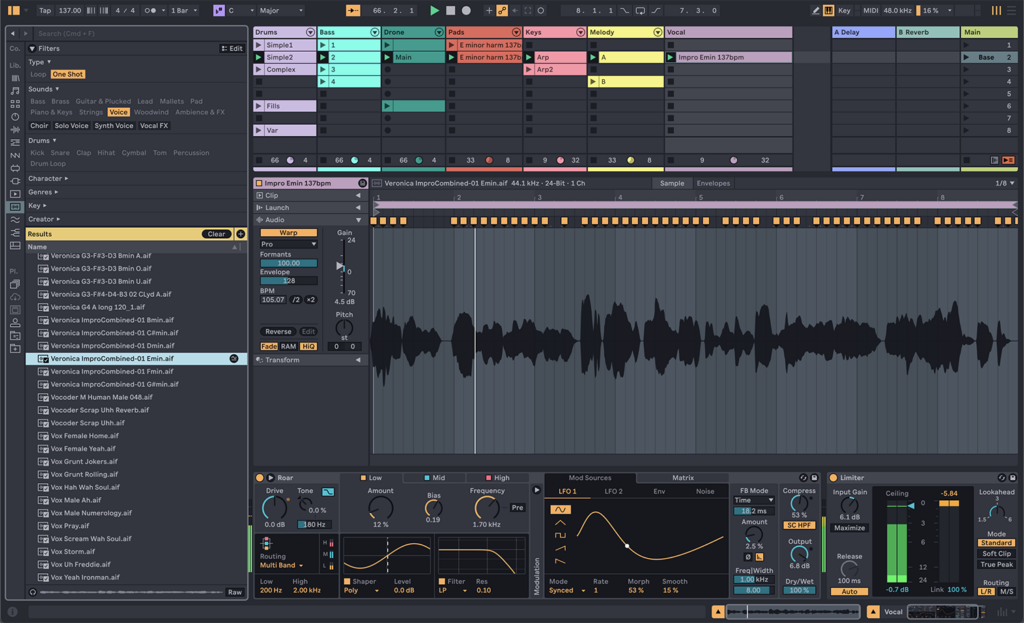
And because it’s audio-based, you can create sessions using tools you already trust:
Any DAW (Ableton, Logic, FL Studio, Reaper, etc.)
Any audio editor (Audition, RX, etc.)
Any workflow you like—from precise engineering to artistic experimentation
Why the “19 kHz carrier” matters
Enkidu uses an inaudible high-frequency carrier (~19 kHz) to carry the light-control information. That keeps the experience clean for the listener, while giving you an incredibly practical benefit:
Light programming becomes a normal audio production task.
You’re not locked into one small editor—you’re working in the same environment used for professional audio, automation, timing, and modulation.
Real creative freedom (not just “pick a preset”)
When you build sessions in a DAW, you gain control that many closed systems simply don’t prioritize.
Examples of what creators typically want (and can reliably build in audio workflows):
Waveform feel (soft sine-like pulsing vs sharp strobe-like hits)
Phase alignment (tight relationship between the music and the visual rhythm)
Pulse width / texture (how “open” or “snappy” the pulses feel)
Programmed brightness envelopes (breath cycles, intensity arcs, gentle landings)
Precise timing (repeatable down to the millisecond—especially important for guided journeys)
This is why Enkidu is favored by facilitators and artists who want the lamp to feel like an instrument, not just a playback device.
No dedicated app required: play it anywhere
Because the light signals are inside the audio, using Enkidu is simple:
Connect your player to the lamp (AUX cable, or Bluetooth depending on your setup).
Keep your player volume at maximum, so the encoded control signal stays intact.
Press play—your session runs like a normal track.
That means:
No account logins, no “supported devices” list
No waiting for platform updates
No dependency on one app to access your library
Why perfect audio + light sync matters
In many hypnagogic experiences, the difference between “interesting” and “deep” comes down to coherence.
When light pulses are truly synchronized with the sound:
The experience feels like one unified journey, not two separate layers
Rhythm and emotion land harder (your “peak” moments actually peak)
Facilitators can guide with confidence because the timing is consistent
Some systems offer manual or limited ways to align sound and light. Enkidu’s audio-driven method makes sync native—because the light control is literally part of the audio.
Designed with eye-safety standards in mind
Light spectrum quality & eye safety
Enkidu uses Bridgelux Vesta® Thrive™ LEDs—an engineered “human-centric” white spectrum designed to more closely match natural light. Thrive is specified with very high color quality (typical CRI ~98 and strong TM-30 metrics), so the light feels rich and smooth rather than cold or clinical.
Minimal harsh blue + warmer white options
Many standard white LEDs rely on a strong blue pump that can create a noticeable blue spike. Bridgelux states Thrive delivers lower blue light intensity at shorter wavelengths and a smoother spectrum across the visible range.
Enkidu also supports warmer color temperatures (lower Kelvin), which naturally reduces blue content even further.
Enkidu is built with the principles of IEC/EN 62471 (Photobiological Safety of Lamps and Lamp Systems) in mind—the standard used to evaluate potential optical hazards (including blue-light retinal hazard) based on real-world exposure conditions.
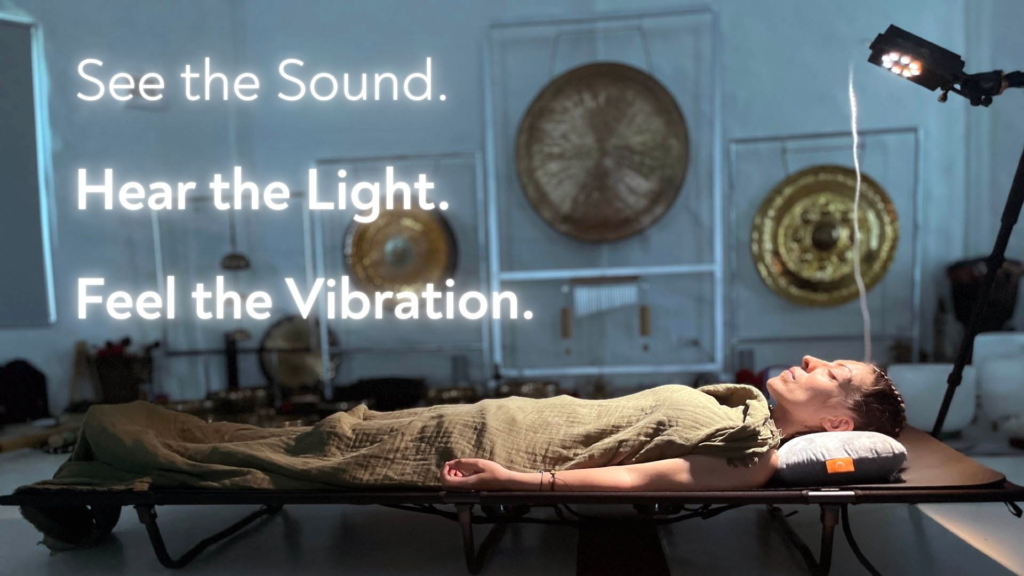
Practical use stays simple: closed-eye sessions, avoid staring into the LEDs, start lower and increase gradually, and keep sensible distance—especially at maximum output.