Frequently Asked Questions
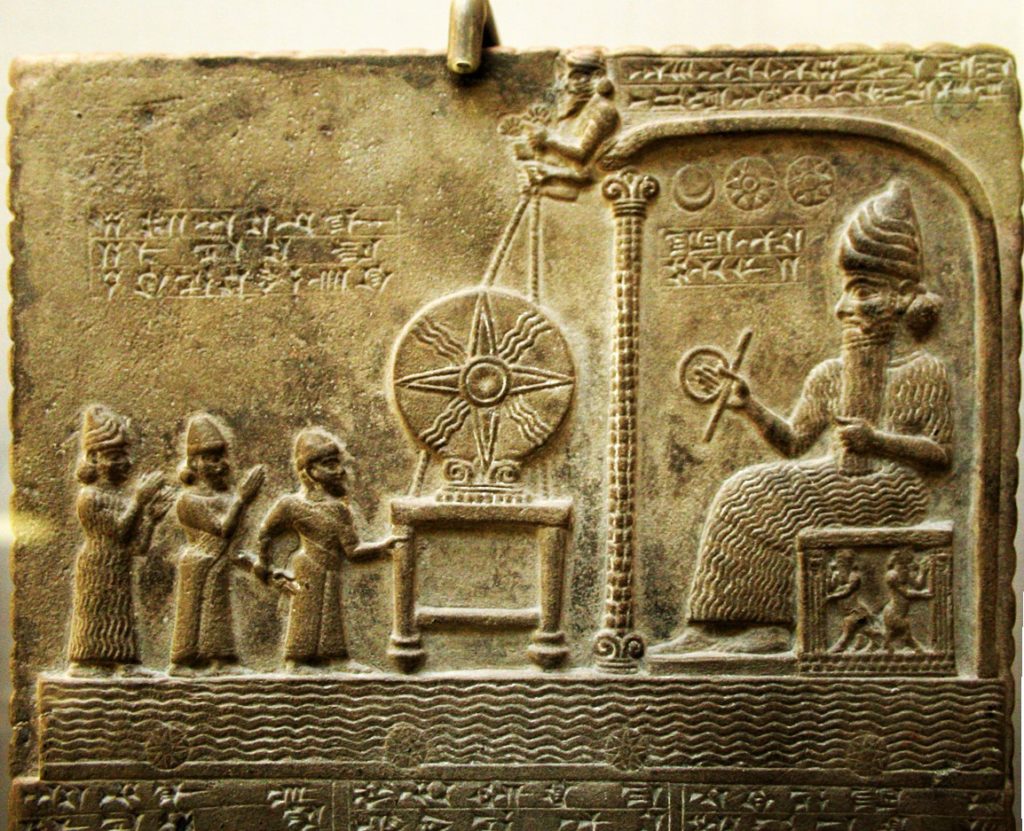
The name ‘Enkidu’ comes from one of the oldest stories written, the Epic of Gilgamesh from ancient Mesopotamia which is often regarded as the earliest surviving great work of literature.
Read more: THE EPIC OF GILGAMESH
Frequently Asked Questions
When will I notice the effect of BWE?
The time it takes to see results will differ from person to person and will depend on the goals of the client. Sessions involving relaxation should relax the client gradually over 6-10 minutes. Relaxation is a very noticeable effect, whereas, with a concentration session, it may take a few sessions to realize what effect it is having. Also, some sessions are meant for long-term changes, and for them, it may take weeks or months to notice an effect.
Is it possible to use Enkidu for more than one person at the same time or even for larger groups?
Yes, two people can easily share the experience. Either lying down or sitting next to each other. For a group of people, you need to put the light further away to cover a larger area which results in losing some of the light intensity and there the effect, especially in light therapy.
In the case of larger groups, you use two or more light machines at the same time. Enkidu is designed in a way that allows you to connect multiple devices and run all of them with synchronicity.
Can Children use Enkidu light machines?
Although most children love the experience, you need to be sure that they are not sensitive to flickering light which might cause seizures. We recommend they be examined by a physician for epilepsy or illnesses that may contribute to seizures before the use of this device, as they are more susceptible to seizures.
The time it takes to see results will differ from person to person and will depend on the goals of the client. Sessions involving relaxation should relax the client gradually over 6-10 minutes. Relaxation is a very noticeable effect, whereas, with a concentration session, it may take a few sessions to realize what effect it is having. Also, some sessions are meant for long-term changes, and for them, it may take weeks or months to notice an effect.
Yes, two people can easily share the experience. Either lying down or sitting next to each other. For a group of people, you need to put the light further away to cover a larger area which results in losing some of the light intensity and there the effect, especially in light therapy.
In the case of larger groups, you use two or more light machines at the same time. Enkidu is designed in a way that allows you to connect multiple devices and run all of them with synchronicity.
Although most children love the experience, you need to be sure that they are not sensitive to flickering light which might cause seizures. We recommend they be examined by a physician for epilepsy or illnesses that may contribute to seizures before the use of this device, as they are more susceptible to seizures.
What is Audiostrobe?
AudioStrobe is the standard way to communicate with AVS machines to control the flashing of LEDs. It is an inaudible signal sent with the rest of the sound of your session. You will probably not be able to hear it, but any AudioStrobe-decoding device will be able to interpret that signal and use it to drive the flashing of LEDs. Because AudioStrobe uses sound to drive the LEDs, it can be used from any sound device, such as an iPod, CD player, or the speaker/headphone port of your computer.
What is Isochronic Beat?
Any string of pulses is separated by equal periods. In AVS this term is applied to the beats heard when a carrier tone at a frequency usually referred to as the pitch, is amplitude modulated by another signal, the frequency of which is commonly referred to as the rate, or entrainment frequency. The shape of the modulating wave can be chosen to create a variety of effects, ranging from the smooth, gentle sine, through triangle, square, etc. to custom shapes that might sound like drumbeats, clicks, etc. Some studies indicate that the evoked response is stimulated on the leading edge of the pulse and steep rise times tend to be more effective in eliciting a response. Beats heard during a ramp between frequencies are, by definition, not isochronic, because the period between them is changing. Such beats, or any random or variable rate, are just plain pulses.
What is 432 Hz tuning?
A=432 Hz, known as Verdi’s ‘A’ is an alternative tuning that is mathematically consistent with the universe. Music based on 432Hz transmits beneficial healing energy because it is a pure tone of math fundamental to nature.
AudioStrobe is the standard way to communicate with AVS machines to control the flashing of LEDs. It is an inaudible signal sent with the rest of the sound of your session. You will probably not be able to hear it, but any AudioStrobe-decoding device will be able to interpret that signal and use it to drive the flashing of LEDs. Because AudioStrobe uses sound to drive the LEDs, it can be used from any sound device, such as an iPod, CD player, or the speaker/headphone port of your computer.
Any string of pulses is separated by equal periods. In AVS this term is applied to the beats heard when a carrier tone at a frequency usually referred to as the pitch, is amplitude modulated by another signal, the frequency of which is commonly referred to as the rate, or entrainment frequency. The shape of the modulating wave can be chosen to create a variety of effects, ranging from the smooth, gentle sine, through triangle, square, etc. to custom shapes that might sound like drumbeats, clicks, etc. Some studies indicate that the evoked response is stimulated on the leading edge of the pulse and steep rise times tend to be more effective in eliciting a response. Beats heard during a ramp between frequencies are, by definition, not isochronic, because the period between them is changing. Such beats, or any random or variable rate, are just plain pulses.
A=432 Hz, known as Verdi’s ‘A’ is an alternative tuning that is mathematically consistent with the universe. Music based on 432Hz transmits beneficial healing energy because it is a pure tone of math fundamental to nature.
NIR and Red-Light Therapy FAQ
Does Infrared light therapy hurt?
No. Infrared light therapy is gentle, painless, safe, non-invasive, and nonabrasive. There have been no reports of adverse reactions
Can I treat my pets with Infrared Therapy?
Yes, your pets will love it. You can use your machine (on a low setting) for any painful condition your pet suffers from. You can use it for injuries, arthritis, sore hips, and post-surgical healing.
How Long Until I See Skin Results?
It depends on your specific skin and its condition. Red light therapy is not an immediate miracle maker. Changes won’t occur overnight, but it will give you, ongoing anti-aging benefits anywhere from 24 hours to 3 months, depending on your condition and how often the light is used.
To see a noticeable change in wrinkles and fine lines, you may need at least a 2-month home treatment, at least 2 times a week. To maintain the improvement, you should continue doing red light therapy home treatments once a week. You’ll see fast improvements in your skin tone, smoothness, and brightening. Some people report this after only 2 weeks (that “healthy glow” we all want). We recommend treatments for at least 20 weeks, for maximum results. To keep track of the anti-aging benefits of red light therapy, we recommend taking weekly or monthly pictures with a good quality camera, in the same lighting, at the same time of the day. Looking in the mirror randomly is not the best way to see your progress over time.
Can Red Light Therapy be combined with Other Wavelengths?
Yes, it can. Most anti-aging home devices combine red light therapy and infrared light therapy (which can penetrate deeper into your skin). In acne treatment, it’s highly recommended to use both red and blue light therapy (red after blue) to boost the healing of acne and preventing scars.
No. Infrared light therapy is gentle, painless, safe, non-invasive, and nonabrasive. There have been no reports of adverse reactions
Yes, your pets will love it. You can use your machine (on a low setting) for any painful condition your pet suffers from. You can use it for injuries, arthritis, sore hips, and post-surgical healing.
It depends on your specific skin and its condition. Red light therapy is not an immediate miracle maker. Changes won’t occur overnight, but it will give you, ongoing anti-aging benefits anywhere from 24 hours to 3 months, depending on your condition and how often the light is used.
To see a noticeable change in wrinkles and fine lines, you may need at least a 2-month home treatment, at least 2 times a week. To maintain the improvement, you should continue doing red light therapy home treatments once a week. You’ll see fast improvements in your skin tone, smoothness, and brightening. Some people report this after only 2 weeks (that “healthy glow” we all want). We recommend treatments for at least 20 weeks, for maximum results. To keep track of the anti-aging benefits of red light therapy, we recommend taking weekly or monthly pictures with a good quality camera, in the same lighting, at the same time of the day. Looking in the mirror randomly is not the best way to see your progress over time.
Yes, it can. Most anti-aging home devices combine red light therapy and infrared light therapy (which can penetrate deeper into your skin). In acne treatment, it’s highly recommended to use both red and blue light therapy (red after blue) to boost the healing of acne and preventing scars.
What is LED Light Therapy?
LED therapy uses color light wavelengths to penetrate and treat the skin, via LED (light-emitting diodes). LED is a light source that emits infrared light (and thereby, heat) when activated. It is most often administered via single light units that are directed at the skin from a few inches away. The anti-aging and/or pain relief effects come from exposure to the light. There is no machine-to-skin contact.
Is Laser More Effective Than LED Red Light Therapy?
While most people think that lasers work better than LED systems, this is not true. Even recent studies have found that light therapy through LED is just as effective as light therapy via laser diodes. Once a laser light penetrates the skin it is no longer a collimated beam of light, it is the same as LED.
Can I Use My Regular Skin Care Products While Using Red Light Therapy?
Generally, yes, you can still use your regular skincare products. But, before using red light therapy, make sure your skin is thoroughly cleansed off all products. After treatment, you can follow up with your typical skincare routine.
This is because most products can block the penetration and absorption of light. Others (like benzoyl peroxide or alcohol) can cause skin irritation when used under intense light.
LED therapy uses color light wavelengths to penetrate and treat the skin, via LED (light-emitting diodes). LED is a light source that emits infrared light (and thereby, heat) when activated. It is most often administered via single light units that are directed at the skin from a few inches away. The anti-aging and/or pain relief effects come from exposure to the light. There is no machine-to-skin contact.
While most people think that lasers work better than LED systems, this is not true. Even recent studies have found that light therapy through LED is just as effective as light therapy via laser diodes. Once a laser light penetrates the skin it is no longer a collimated beam of light, it is the same as LED.
Generally, yes, you can still use your regular skincare products. But, before using red light therapy, make sure your skin is thoroughly cleansed off all products. After treatment, you can follow up with your typical skincare routine.
This is because most products can block the penetration and absorption of light. Others (like benzoyl peroxide or alcohol) can cause skin irritation when used under intense light.