
The Science Behind Hypnagogic Lamps
Brainwaves
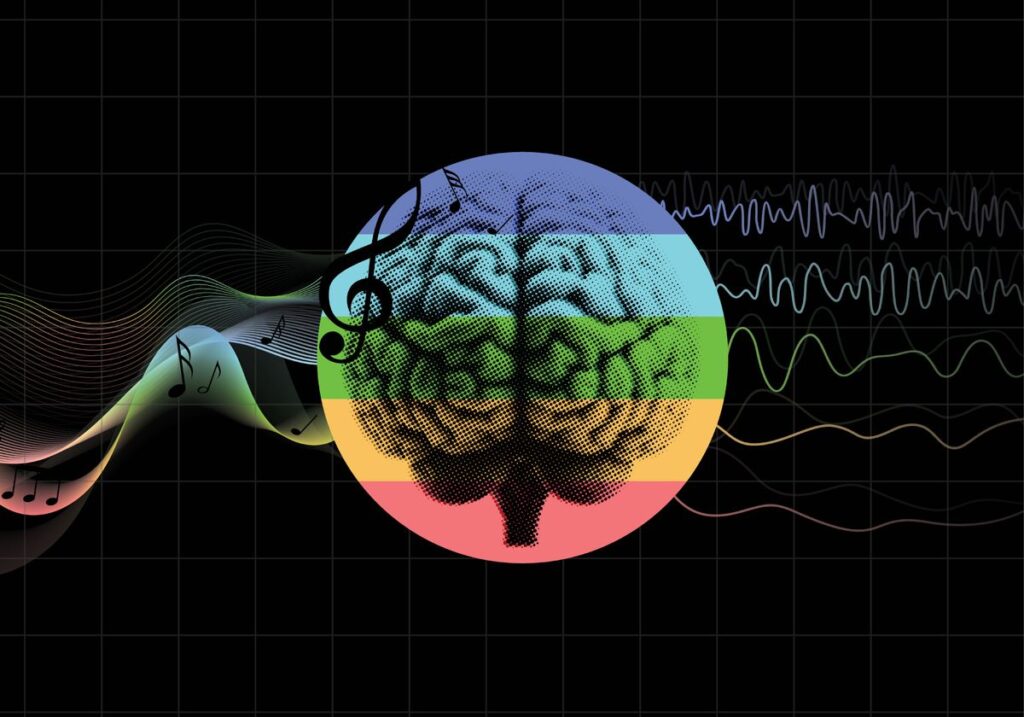
Your brain contains billions of neurons that communicate through electrical and chemical signals. When you perform a task—moving your hand, remembering something, focusing—different regions of the brain activate, and groups of neurons fire in synchronized rhythms.
For complex tasks or sharp concentration, these rhythms increase in speed (high-beta waves, up to ~30 Hz). In deep sleep, they slow down to very low frequencies (delta waves, around 0.5 Hz). These patterns can be detected with EEG sensors placed on the scalp.
The brain never operates at just one frequency. All brainwave ranges are active at the same time, but the dominant rhythm at any moment strongly influences your mood, awareness, and mental state.
Brainwave Entrainment
Brainwave entrainment uses sensory stimulation—primarily light and sound—to encourage the brain to shift into a desired mental state. By presenting rhythmic pulses at a specific frequency, these signals boost one brainwave range so it becomes more dominant, gently guiding the brain to match that rhythm.
The effect is natural and intuitive. Just as you instinctively move to the beat of music, or feel calm while watching the flicker of a campfire or candle, the brain tends to synchronize with the patterns it sees and hears.
Although often seen as a modern technique, brainwave entrainment has deep historical roots. Ancient cultures used rhythm and light to alter consciousness: shamans used drumming to access lower-frequency states, Greeks experimented with flickering sunlight through spinning wheels, and Sufi practitioners still use rhythmic whirling to enter trance-like states.
What is a Hypnagogic Lamp (Light Machine)?
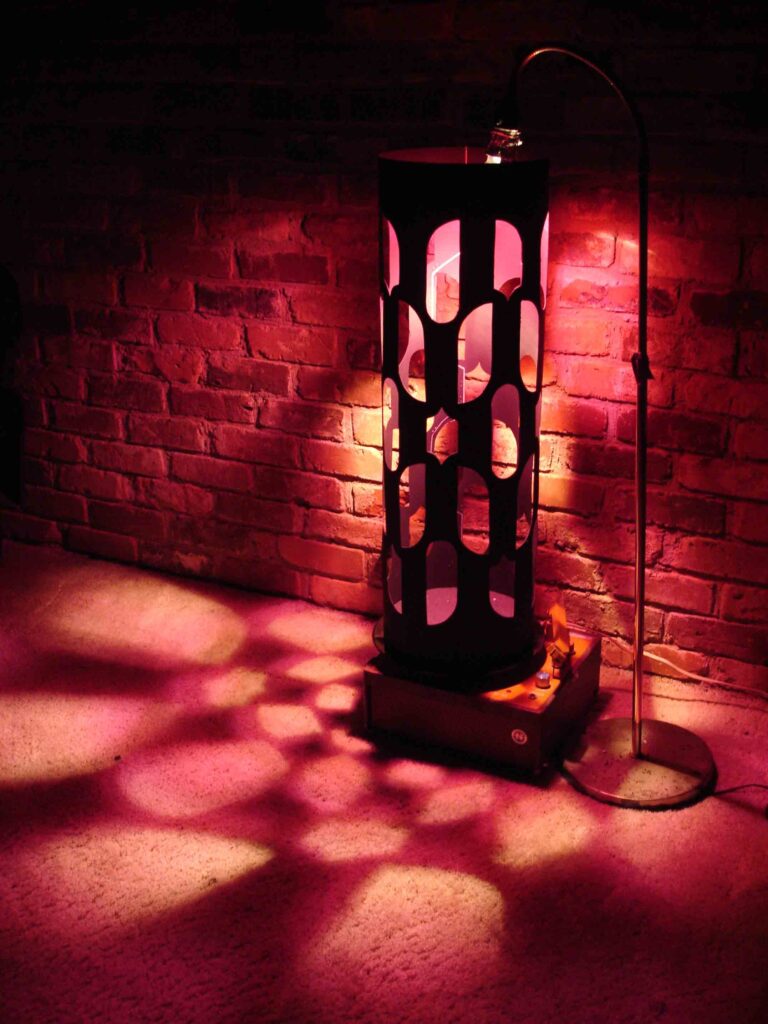
A hypnagogic lamp is a specialized light device that uses rhythmic light pulses (often combined with sound) to guide the brain toward specific mental states—like deep relaxation, meditative absorption, creative flow, or the dreamlike “in-between” state known as hypnagogia (the transition between wakefulness and sleep).
When you close your eyes and experience carefully timed light pulses, your visual system can generate vivid internal patterns—colors, geometry, motion, and immersive “inner visuals.” At the same time, the brain naturally tends to synchronize (to a degree) with repeated sensory rhythms, which is why many people report feeling calmer, more focused, or more deeply “dropped in” after a session.
A hypnagogic lamp is designed to make this experience:
-
More immersive (larger field of light, stronger visual presence)
-
More stable and consistent (precise timing and smooth intensity control)
-
More multisensory (optional synchronization with music and/or vibration)
How is it different from Mind Machines?
Traditional mind machines (often called sound & light machines) typically use LED goggles or small light sources paired with audio tracks to create entrainment-style sessions. They can be effective—especially for beginners—and are often designed for simple relaxation, sleep support, or focus.
A hypnagogic lamp takes the same core concept and expands it into a full immersive environment:
Mind machines / sound & light machines usually:
-
Use goggles with small LEDs close to the eyes
-
Offer basic pulsing patterns and standard programs
-
Feel more like a “training tool” or personal device
Hypnagogic lamps usually:
-
Use a larger, powerful light source that fills more of the visual field
-
Create richer closed-eye visuals (more depth, movement, geometry)
-
Are better suited for deep sessions, ritual-like experiences, and even group setups
-
Can be designed for tight synchronization between light pulses and music (and optionally vibration), which can intensify the sense of immersion and coherence
Note: As with any flickering-light device, it’s important to use responsibly and follow safety guidance (especially for anyone with photosensitive epilepsy risk).
Applications: How People Use Light Machines
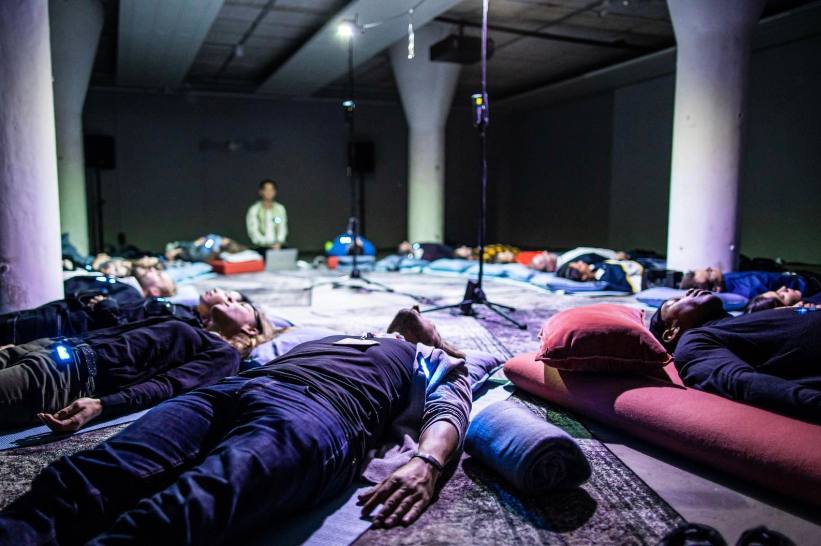
Light machines are non-invasive tools that use rhythmic light (often paired with synchronized sound) to help guide the brain into specific states. Common use cases include:
-
Relaxation & stress reset: downshifting the nervous system, calming mental noise, and “resetting” after a busy day.
-
Meditation & mindfulness support: making it easier to settle attention and enter deeper, quieter states.
-
Sleep wind-down: gentle evening sessions to support a smoother transition toward rest.
-
Focus & creative flow: priming the mind before deep work, music-making, writing, or visual imagination.
-
Breathwork, sound journeys & facilitation: adding a consistent sensory layer for solo practice or small group sessions.
Psychedelic-Style States & Integration
Some users also explore the lamp as a substance-free route to altered states, since intense patterned stimulation can produce vivid closed-eye imagery and trance-like absorption. Others use softer programs for psychedelic integration—supporting grounding, reflection, and emotional processing in the days after a strong experience, especially when paired with journaling or meditation.
Start conservatively, increase intensity gradually, and always follow safety guidance.
State-Based Goals
Light machines are often used to support specific mental states by guiding attention and arousal level through rhythmic stimulation. Different session styles can feel different, but in general:
-
Calm / downshift: slower, smoother programs are commonly used for relaxation, unwinding, and meditation.
-
Meditative absorption: steady rhythms and gradual transitions can help the mind settle and sustain a deeper inward focus.
-
Focus / clarity: more activating sessions may feel energizing and mentally “bright,” often used before deep work or creative output.
-
Dreamlike / hypnagogic exploration: certain patterns and intensities can encourage vivid closed-eye imagery and a trance-like, in-between state.
Individual response varies—your best “goal state” is the one that feels supportive, comfortable, and repeatable.
Light + Sound Synergy
Light and sound can each influence attention and state on their own, but when they are designed to work together, the experience often feels more immersive and coherent.
-
One combined rhythm: synchronized pulses and audio cues give the brain a clearer, unified pattern to follow.
-
Deeper immersion: music adds emotion and narrative, while light adds vivid inner imagery—together they can feel like a complete sensory journey.
-
More consistent sessions: when timing is intentional (rather than random or mismatched), the session tends to feel smoother and more “locked in.”
This is why many users prefer programs where the light pulses are aligned with the structure of the audio.
Safety
Light machines are powerful sensory tools. Use them responsibly.
-
Photosensitivity warning: do not use if you have a history of photosensitive seizures/epilepsy, or if flickering light is a known trigger for you. When in doubt, consult a clinician.
-
Start gentle: begin with lower brightness and shorter sessions, then increase gradually over time.
-
Stop if uncomfortable: if you feel anxiety, dizziness, headache, nausea, or overstimulation—end the session, open your eyes, turn on room lights, and rest.
-
No risky situations: never use right before driving, operating machinery, or doing tasks that require full attention.
-
Group facilitation: explain opt-out options (“open eyes / look away / stop anytime”), keep intensity conservative for first-timers, and allow a few minutes for grounding afterward.
Entrainment devices are wellness tools and are not intended to diagnose, treat, cure, or prevent any medical condition.